What type of society do we want to live in? What role will religion play in it? How can I as an individual relate to current challenges of society? These and so many more questions were asked and at least partially answered at this vast event in Lower Saxony around the first of May.
About 100,000 visitors came to the event, enjoying over 1,500 single venues created by over 30,000 active contributors. Kirchentag is a biannual event that came into being after World War Two was finally over and the Protestant Church(es) had to come to terms with their Nazi-past. From its inception, the Kirchentag was always a movement of lay people contrasting the official church. Critique, ambition, enthusiasm, and the need for changes drove this mega event from the beginning. This year was no different.
From 28 April until 5 May 2025, I was working in Hanover. During that time, I fulfilled a role as event manager in the programme division of the Kirchentag. It was my responsibility to make sure the 83-ish individual events of the Centre for Children and Families could run smoothly, safely and to the joy of all participants. These events were scattered around five different locations in Hanover’s city centre: the House of Youth (“Haus der Jugend”), the Neustädter Church St. Johannis, the Kreuzkirche, the Opera Place and the “Masch-Park”.

During the preparation for this mega-event, I was fortunate to get to know a team of brilliant co-workers. From the very beginning, they put me under their wings and helped me to quickly pick up where my predecessors had left things. Thanks to them I was able to relatively quickly gain an overview and find myself being productive in preparing the centre’s events.
This spirit continued as the actual proceedings took place. Most of the time I had my working space in our office at the northern district of the fair in Hanover. From there I helped to coordinate last minute tasks and to put out some minor organisational fires that came up. Besides, I visited the actual event locations on-site, focussing on the Kreuzkirche and the House of Youth. As support I had the wonderful help of a volunteer, who acted as my double and with whom I worked in close collaboration throughout this phase. (If you are reading this: Thanks a lot!)
My time on-site was the most intense. In general, our events were largely a success. Many people came and especially the House of Youth attracted between eight and ten thousand visitors a day. Especially on Thursday evening, after the first full day, I was very happy. It seemed like all the work would pay off: many people came, nearly everyone was happy and most events were packed with participants. One of the reasons why this went so smoothly was the excellent coordinating work of our rangers on-site. A big “Thank you!” for your great help as well!
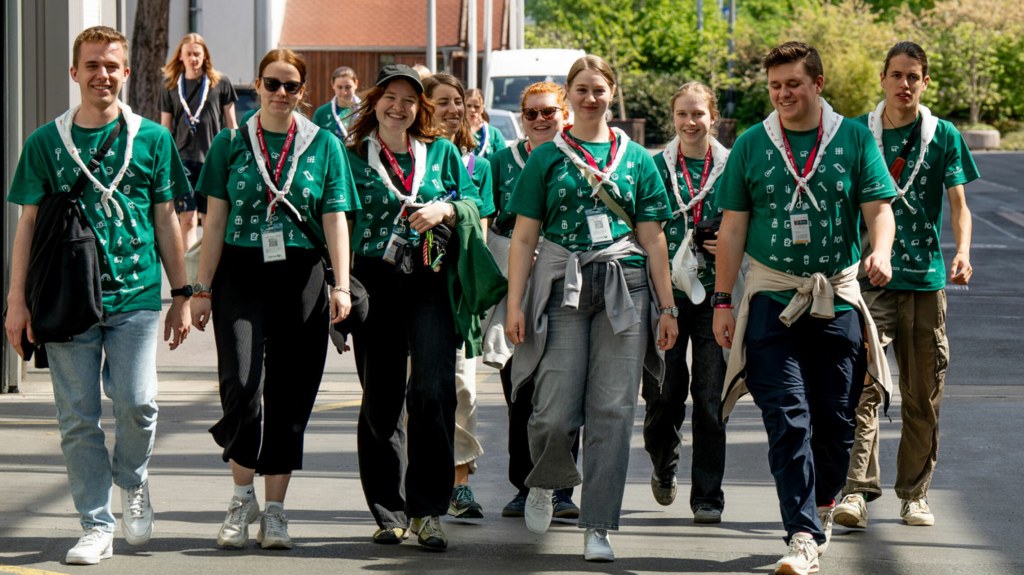
On Friday and Saturday this trend continued. But during these days we had some problems with three neuralgic events – events that provoked critique in the public. In general we handled the occuring situations quite well, although I am personally not happy with some outcomes. Especially on Saturday the right-wing reports about our events caused a climate of fear amongst some of our participants. Even though no confrontation occured, some people rather stayed away from the House of Youth and you could feel that in the end.
The fear some biased right-wing media outlets produced, was disgusting and had nothing to do with journalism or a based discussion about the contents of some events. Furthermore, two of our contributors were named in those outlets, which resulted in one case in complications at the workplace, since angry calls registered there. As the situation was more or less over for me by Sunday, it continues to stay problematic for these two contributors also on levels far beyond the Kirchentag. Something which is not fair at all and which keeps me thinking to this day.
The thing is that it is perfectly fine to criticize some events on a content-level. I myself take issue with some of them. Especially in terms of theology as I understand it, one could argue that our programme had in many parts left biblical foundation and justification. After all, the Kirchentag could have been a forum to discuss all this in a peaceful and friendly manner. However, one take-home-message for me is that some so-called journalists from right wing media lie to you about who they are and that they are not interested in a debate resulting in dialectic progress. Instead, all they care about is the clash and the attention-harbouring created in social media to fund with the resulting revenues their agendas. It was never about critique and debate, it was about a clash of cultures and the attempt to discredit the perceived enemy. What a pity and what a waste of possibilities.
The end of the Kirchentag marked the final service, in which Hanna Reichel gave a pretty interesting sermon along the powerful lines of us having a choice: we shall either learn to live together and share the land we inhabit, or we will have to share the cemetary beneath it. A statement that should keep us thinking about how we handle opposing opinions.
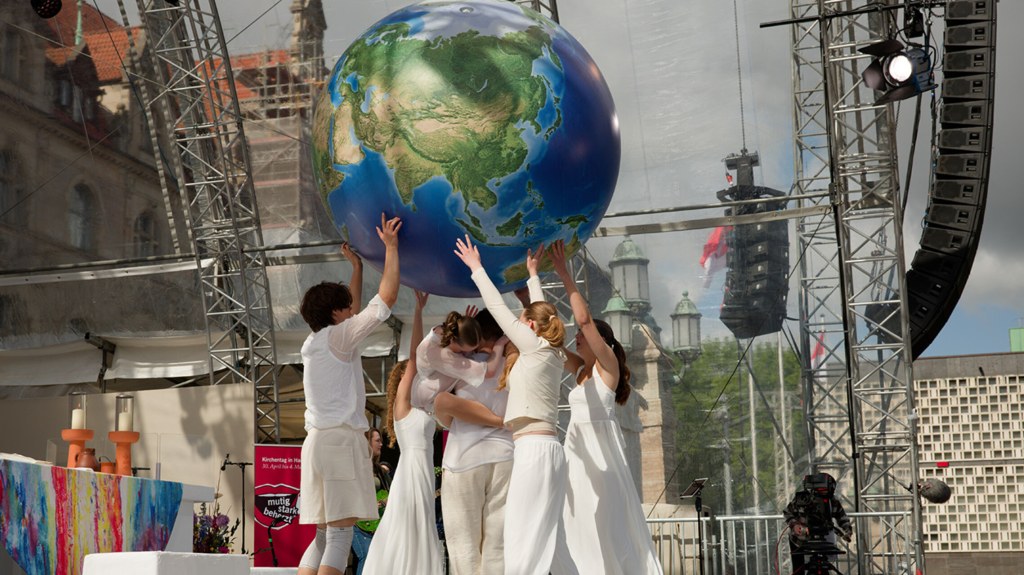
For me this had been an exciting adventure, during which I was very lucky to be able to learn a ton about event management on this scale. I got to know so many lovely people and am extremely grateful for the opportunity to contribute to its success. It will still need some time for me to think everything through that happened and to figure out what I should take with me for the next event. But in any case, it was very exciting!
Writing of which: by now I am working fulltime for the upcoming 104. Catholic’s Day in Würzburg, which will take place in May next year. Save the date, if you are interested. Although smaller than the Kirchentag, it will feature exciting events as well and tons of opportunities to pick up the dialogue.
Discover more from Achim Klüppelberg
Subscribe to get the latest posts sent to your email.
 Achim Klüppelberg