Today, during the night from 25 to 26 April, we mark the 40th anniversary of the Chernobyl disaster. The explosions in reactor block four happened roughly at 1:24 am on 26 April 1986, but the violence emanating from the site continues, as this nuclear catastrophe does not stop to develop ever new scenarios.
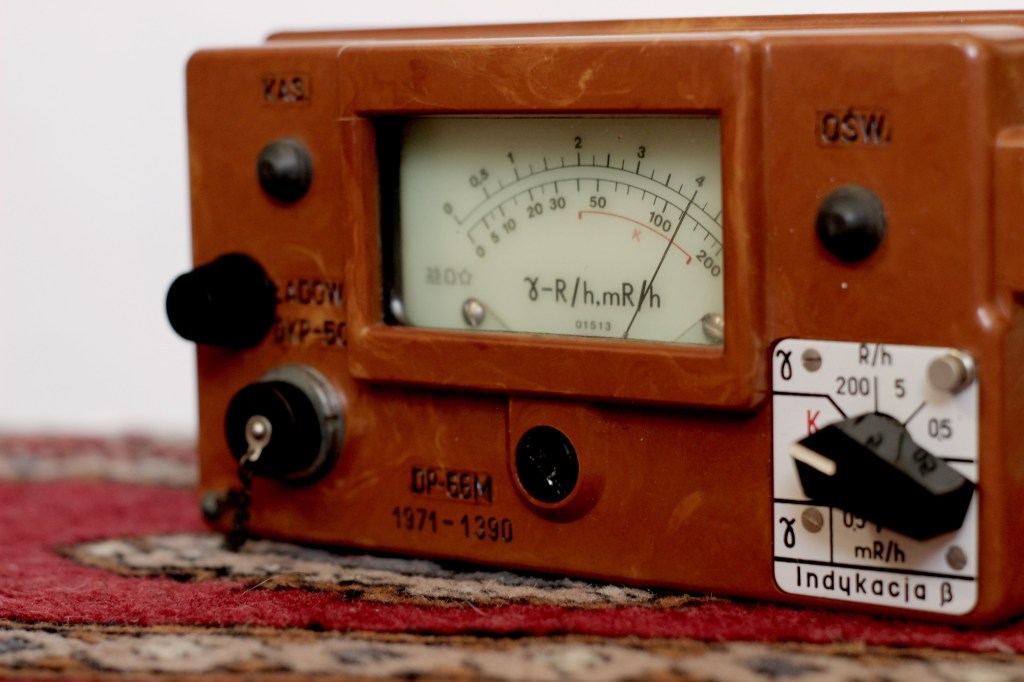
Every year we remember Chernobyl. We discuss what happened, how the experiment turned disaster could come to pass, and what society can possibly learn from this nuclear escapade. Many of these thoughts are necessary and well-founded. However, maybe today we want to take the time to think one step further: what can this memory space of disaster become in the present and near future? What are possible trajectories? Can Chernobyl as a landscape scar finally heal, and can take something else its place? In this blogpost I want to take the time to offer a few scenarios for discussion.
As most people know, Chernobyl Nuclear Power Plant in Northern Ukraine was not always a symbol of dystopia, nuclear technology gone awry, or of discarded livelihoods. When this nuclear giant was built, it embodied hope for a new generation of people, creating new (socialist) ways of life powered by futuristic and mighty technological appliances. So-called Soviet modernity was to be transferred to rural Polesia. The young workers’ town of Pripyat was constructed as a showcase for what developed Socialism could be held accountable for – all powered with the force of the ostensibly tamed atom.
Of course, 1986 changed this perception profoundly. When the catastrophe hit, haphazard shortfalls in safety considerations, the blindly enforced mentality of plan-fulfilment, as well as the limitations of the Soviet economic system were open for everyone to see. Discussions were made, committees proceeded, and reports were written. The USSR tried to contain the negative consequences of the disaster, but they and the world community at large have failed in many regards. Families, villages, and cities suffered tremendously. Many problems still persist to this day.
When the Soviet Union was dissolved and the independent states of Ukraine, Belarus, and Russia emerged, different approaches to reclaiming territory lost to Chernobyl’s radioisotopes were taken. Special zones were created, where people without special authorisation were prohibited to enter. Agriculatural produce, timber, mushroomes, berries and game from those areas were forbidden. However, many different products ended up on markets anyway. Whether by illegal logging, fishing, pillaging, or harvesting, or by legalised mixing of contaminated produce with “clean” counterparts to keep measurements under authorised limits, potentially dangerous goods ended up with local, regional, and international consumers.
There were also attempts, to properly (and legally) reclaim agricultural land and forests. By introducing new ways of growing crops, of using special fertilizer, or only using specific parts of a grown plant, agriculturalists tried to undercut specified limits of radioactivity. Maybe most famous became the so-called “Atomik Vodka“, which claims to be safe to consume, and to generate some income for local low-scale farmers. While some progress in this area had been made, which certainly improved the lives of several individuals living in the affected areas, generally speaking these contaminated lands have not been successfully reclaimed. Additionally, I would also suspect a lot of wishful thinking behind these efforts, as it certainly would be great to reuse the land, but one cannot argue with radioactive contamination – only with the authorities creating the levels of legalised poisoning aka official limits of safe consumption.
When on 24 February 2022 Russia invaded Ukraine, Russian army forces also tried to reach Kiev. On their way from Belarus to the Ukrainian capital, Russian soldiers also occupied Chernobyl Nuclear Power Plant. Once there, they looted the place, destroyed scientific instruments and terrorised the local staff and workers. Furthermore, they dug trenches in the Red Forest – one of the hotspots of radioactivity – and arguably ate wild contaminated animals, thus contracting radiation sickness. Eventually, Russian troops retreated back to Belarus, and Ukraine retook the station.
Although under Ukrainian authority once again, people struggled in maintaining the nuclear power plant. Unfortunately, this did not mean peace for Chernobyl. On 14 February 2025, a drone hit the outer shell of the second sarcophagus. The projectile struck through its shield. While nuclear engineers and workers closed the resulting hole with makeshift means, the International Atomic Energy Agency argues that the second sarcophagus has lost its primary function of keeping radioactivity inside and enabling the final decommission of reactor block four as well as the first sarcophagus.
Professor Anna Storm of Linköping University classifies abandoned technological disaster sites as postindustrial landscape scars. Furthermore, she argues that such a site can either be reused, ruined, or undefined. Now, Chernobyl certainly is a tricky case. Certainly there have been massive efforts to reuse the site and its adjacent territories. Maybe the prospect of a massive solar farm using existing energy infrastructure might be the most promising for rewriting the history of Chernobyl once again from beacon of hope, to disaster, to something productive. Nevertheless, most people would probably agree that the site is actually ruined and that productive human activity within the spheres of agriculture, industry or woodworks proves to be wishful thinking. While both views are certainly to some degrees not wrong, I want to argue that Chernobyl’s future as a memory space and a postindustrial landscape scar is yet undefined.
For Chernobyl to have a positive future, first of all the horrible war between Russia and Ukraine (including both alliances) needs to end – immediately. While so many voices find seemingly great reasons to get involved in bloodshed for imperial gains, money, land, power and whatnot, I desperately miss those voices that give good reason to peace (maybe the pope’s announcements and calls for peace can be seen as a light in the dark here). But like Willi Brandt said in 1981: “Peace is not everything, but everything is nothing without peace.” Certainly, freedom is worth the struggle, but you cannot progress as a society for the welfare of everyone as well as the environment, if you have to prioritise buying ammunition, keeping your soldiers fed, and invaders at bay. Russia has the power to end this war immediately. I hope she does.
Chernobyl impacts both Ukraine and the Russo-Belarusian union state. Therefore, its safeguarding should be a priority for all three countries, so closely linked to the fate of the power plant – spatially, historically, and sentimentally. Once peace is restored, it is absolutely necessary to restore the second sarcophagus to operating condition. Given the state of Ukrainian industrial and financial means, this needs to be an international effort. Furthermore, Ukrainian nuclear scientists should continue to collaborate with their international counterparts.
Next, Chernobyl needs to be decommissioned. This is going to be a tremendously difficult task, which ultimately also needs a safe final depository for all that nuclear waste. Unfortunately, such a depository does not yet exist. While some people argue that Chernobyl could indeed become such a depository, pointing to its already contaminated state as well as its ready-in-place infrastructure, the swampy nature of the wetlands Chernobyl is located in, makes longterm safeguarding of radwaste highly questionable.
Third, personally I think it would be a great idea to reinvent Chernobyl as a clean environmentally friendly electricity producing facility. Maybe picking up the earlier idea of a massive solar farm. Thus, the story Chernobyl tells could once again switch towards something hopeful and progressive – away from its fearsome destructive force of the past. In an ideal (and maybe a bit naive) world, such an endeavour could also invite Belarus to participate. Once again reinvigorating the originally intended peaceful links between both countries. But of course given the current political situation, this will not happen. And yet, one can still hope for the future.
In any case, Chernobyl refuses to heal. It tasks us with safeguarding its physical, but also metaphysical form. Chernobyl demands from us that we do not let anything like this ever happen again. Its 40th anniversary is a stern reminder of that duty.
For a great current review of the situation I recommend this Guardian article.
For further reading, you might want to check out my publications about Chernobyl:
Discover more from Achim Klüppelberg
Subscribe to get the latest posts sent to your email.
 Achim Klüppelberg