Today my article “Joining the Dnieper Cascade. An Envirotechnical Water-History of Chernobyl Nuclear Power Plant, 1927-1986” was published online in the journal Water History. I am really happy that this was possible. You should check it out! Unsurprisingly, I am indebted to so many people who supported me during the four years this little project took. Thank you all!
Abstract:
Chernobyl Nuclear Power Plant was built at the northern tip of the Dnieper Cascade, a vast industrialisation effort comprising six hydropower plants and their reservoirs. In hydropower’s eyes, the nuclear station can be seen as the seventh extension to the cascade. While Chernobyl took nuclear power to Ukraine from 1970 onwards, its construction was based on experiences gained during the development of these six conventional stations, starting in 1927. Concrete and water, mundane building technologies, mass mobilisation and the attributes of the planned economy characterised the early years of this nuclear giant, not the hunt for uranium or reactor technology. On many levels of institutional and personal hierarchy, overlaps existed between hydropower and the nuclear industry, as water expertise was crucial for Ukraine’s nascent nuclear sector. If Chernobyl is being interpreted as part of the Dnieper Cascade, it becomes clear that the station took a new dimension to the previously established envirotechnical system created by the construction of the cascade. Radioisotopes stemming from its four reactors contaminated the Dnieper catchment area, linking the station via the cooling pond and the Pripyat River, over the Dnieper with those six massive reservoirs, to the Black Sea and thus to world oceans. By contaminating waterways and wetlands, which led to a permanent recirculation of radioisotopes along human, animal, and plant food chains, Ukraine’s first nuclear power plant irrevocably renegotiated the envirotechnical system along the country’s largest river.
What type of society do we want to live in? What role will religion play in it? How can I as an individual relate to current challenges of society? These and so many more questions were asked and at least partially answered at this vast event in Lower Saxony around the first of May.
About 100,000 visitors came to the event, enjoying over 1,500 single venues created by over 30,000 active contributors. Kirchentag is a biannual event that came into being after World War Two was finally over and the Protestant Church(es) had to come to terms with their Nazi-past. From its inception, the Kirchentag was always a movement of lay people contrasting the official church. Critique, ambition, enthusiasm, and the need for changes drove this mega event from the beginning. This year was no different.
From 28 April until 5 May 2025, I was working in Hanover. During that time, I fulfilled a role as event manager in the programme division of the Kirchentag. It was my responsibility to make sure the 83-ish individual events of the Centre for Children and Families could run smoothly, safely and to the joy of all participants. These events were scattered around five different locations in Hanover’s city centre: the House of Youth (“Haus der Jugend”), the Neustädter Church St. Johannis, the Kreuzkirche, the Opera Place and the “Masch-Park”.
“Abendsegen Kerzenmeer” by Kirchentag/ Weise.
During the preparation for this mega-event, I was fortunate to get to know a team of brilliant co-workers. From the very beginning, they put me under their wings and helped me to quickly pick up where my predecessors had left things. Thanks to them I was able to relatively quickly gain an overview and find myself being productive in preparing the centre’s events.
This spirit continued as the actual proceedings took place. Most of the time I had my working space in our office at the northern district of the fair in Hanover. From there I helped to coordinate last minute tasks and to put out some minor organisational fires that came up. Besides, I visited the actual event locations on-site, focussing on the Kreuzkirche and the House of Youth. As support I had the wonderful help of a volunteer, who acted as my double and with whom I worked in close collaboration throughout this phase. (If you are reading this: Thanks a lot!)
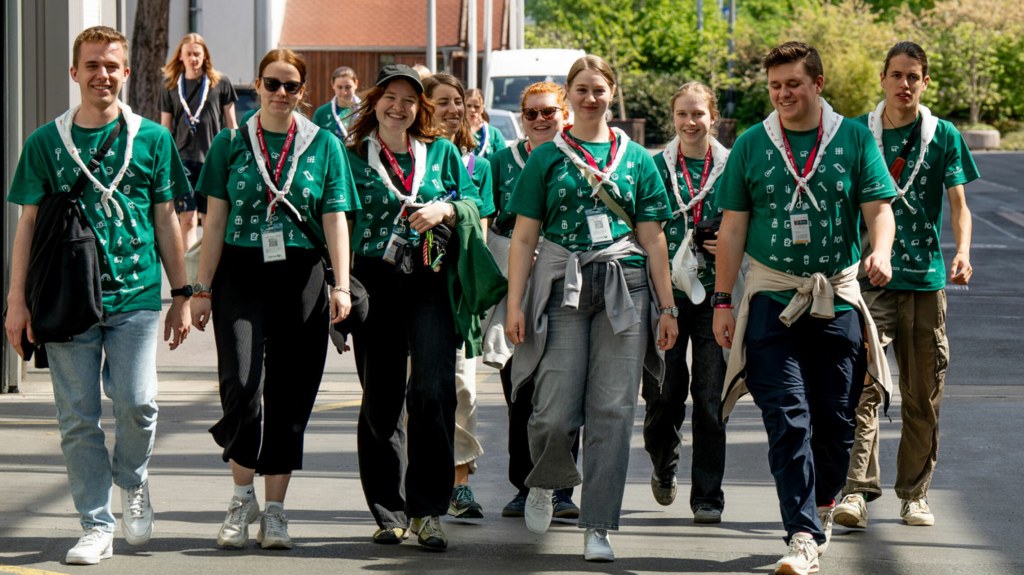
My time on-site was the most intense. In general, our events were largely a success. Many people came and especially the House of Youth attracted between eight and ten thousand visitors a day. Especially on Thursday evening, after the first full day, I was very happy. It seemed like all the work would pay off: many people came, nearly everyone was happy and most events were packed with participants. One of the reasons why this went so smoothly was the excellent coordinating work of our rangers on-site. A big “Thank you!” for your great help as well!
“Ehrenamt” by Kirchentag/ Harbart.
On Friday and Saturday this trend continued. But during these days we had some problems with three neuralgic events – events that provoked critique in the public. In general we handled the occuring situations quite well, although I am personally not happy with some outcomes. Especially on Saturday the right-wing reports about our events caused a climate of fear amongst some of our participants. Even though no confrontation occured, some people rather stayed away from the House of Youth and you could feel that in the end.
The fear some biased right-wing media outlets produced, was disgusting and had nothing to do with journalism or a based discussion about the contents of some events. Furthermore, two of our contributors were named in those outlets, which resulted in one case in complications at the workplace, since angry calls registered there. As the situation was more or less over for me by Sunday, it continues to stay problematic for these two contributors also on levels far beyond the Kirchentag. Something which is not fair at all and which keeps me thinking to this day.
The thing is that it is perfectly fine to criticize some events on a content-level. I myself take issue with some of them. Especially in terms of theology as I understand it, one could argue that our programme had in many parts left biblical foundation and justification. After all, the Kirchentag could have been a forum to discuss all this in a peaceful and friendly manner. However, one take-home-message for me is that some so-called journalists from right wing media lie to you about who they are and that they are not interested in a debate resulting in dialectic progress. Instead, all they care about is the clash and the attention-harbouring created in social media to fund with the resulting revenues their agendas. It was never about critique and debate, it was about a clash of cultures and the attempt to discredit the perceived enemy. What a pity and what a waste of possibilities.
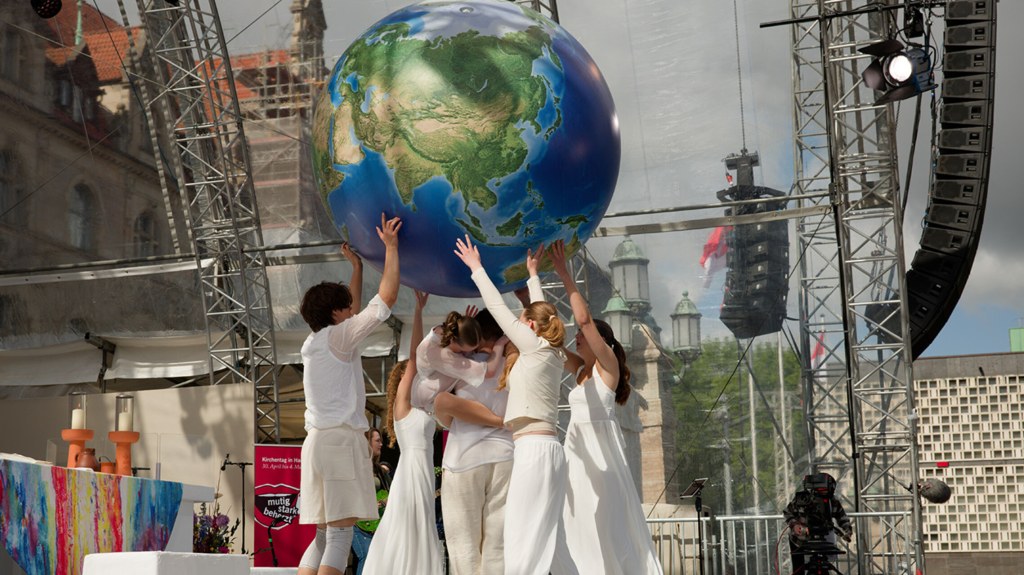
The end of the Kirchentag marked the final service, in which Hanna Reichel gave a pretty interesting sermon along the powerful lines of us having a choice: we shall either learn to live together and share the land we inhabit, or we will have to share the cemetary beneath it. A statement that should keep us thinking about how we handle opposing opinions.
“Schlussgottesdienst Performance Weltkugel” by Kirchentag/ Johna.
For me this had been an exciting adventure, during which I was very lucky to be able to learn a ton about event management on this scale. I got to know so many lovely people and am extremely grateful for the opportunity to contribute to its success. It will still need some time for me to think everything through that happened and to figure out what I should take with me for the next event. But in any case, it was very exciting!
Writing of which: by now I am working fulltime for the upcoming 104. Catholic’s Day in Würzburg, which will take place in May next year. Save the date, if you are interested. Although smaller than the Kirchentag, it will feature exciting events as well and tons of opportunities to pick up the dialogue.
Unfortunately, I am getting a bit angry at society at large during these last months. Sure, there were many larger and smaller political issues that demanded time and attention from everyone. Lest we forget that there is a brutal war going on in Ukraine, Palestine, Yemen, and unfortunately many other parts of this world. But have most people seriously gone nuts over tariffs on Bourbon, peanut butter, Harley-Davidsons, cars, iPhones, and what not? Don’t get me wrong – what Trump is doing to the US looks to me from the outside like Fascism in spé, and the other dictators in the world never disappoint if we need more uplifting topics to talk about over lunch.
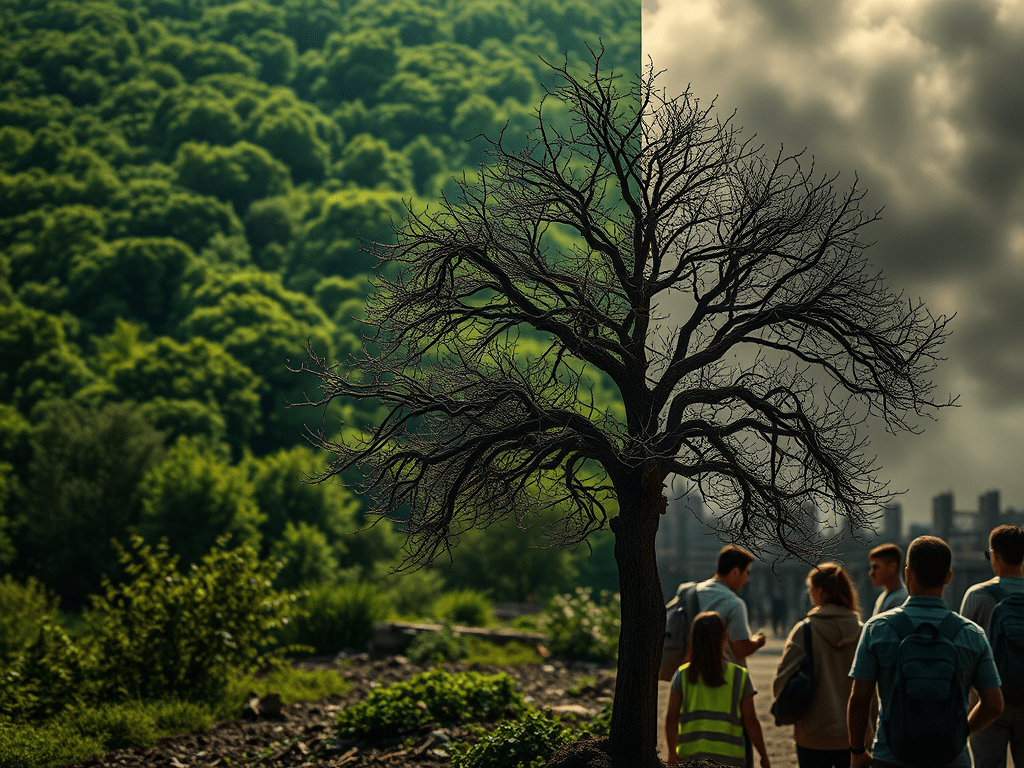
But have you – like most of the mainstream media in the so-called Western World – forgotten the ongoing climate crisis amidst the relentless claims that refugees and migrants would ostensibly be the rootcourse of all the problems caused by capitalism? On 15 April the World Meteorological Organization proclaimed that 2024 was the warmest year in Europe ever recorded:
Oh, and three days later a “Deadly storm” (Deutsche Welle, 18 April 2025) hit Italy, Switzerland and France, causing floods, destruction, electricity outages, and suffering. But sure, to quote the media’s new favourite US-American President, “They never talk about the environment anymore. You know why? […] It’s one of the great scams of all time.” (Friends of the Earth, 12 July 2018). I wonder what the people of New Orleans think about such statements. But – unfortunately – Trump is right in one thing: the climate movement has become quieter, as resources dwindle, activists are under repression and stress (think about the lawsuit against Greenpeace in the US), and the overall bombardment of the media fills everyone with dreadful images of war and immediate threat by our neighbours. Out of the playbook of Gustave Le Bon’s “Psychology of the Masses“.
Well, the legacy of Chernobyl refocusses our attention back to the state of the environment and what we as humans are doing to everything living on this earth. With ever greater ingenuity we are inventing new ways to kill each other, to control the movement of people, to collect humanity’s data, to make rich people richer and the poor even poorer. All with great success. And yet, we fail miserably in containing the problems caused by ONE wicked nuclear reactor out of the roughly 450 active ones in the world that exploded. By the way, if someone has still not gotten the memo: nuclear energy does not help in trying to mitigate the consequences of human-made climate change. While it takes too long to build and is too expensive, it simply poisons us and the plants and animals we are living from.
As news like the drone strike on the Chernobyl sarcophagus on 14 February 2025, which caused a hole in precisely that shelter that is supposed to protect Europe from the still radiating remains of Chernobyl-4, came in, it seems most people were simply more concerned, whether the prices for a new iPhone (who needs a new iPhone anyway?) will go up because of Trump’s erratic trade policies. In the meantime – and people who read my texts know that I have a critical attitude towards the nuclear industry – heroic workers at Chernobyl Nuclear Power Plant are trying to repair the damage done by the horrible war taking place. Surely, a Bundeswehr bolstered with billions and billions of euros to ostensibly protect Germany against foreign threats has come to the aid of wartorn Ukraine in repairing the structure, wouldn’t they? I was waiting for a news story announcing that. Maybe it has slipped my attention, but I guess they have rather spent the money on US-American weaponry.
So, while the great mass extinction is going on all around us for everyone with eyes to see, most people I know are rather busy with following the next nuisance the powerful people of this world are coming up with to keep everyone busy and to keep the dollar, the euro, the rouble, the yuan, the yen, and whatnot rolling into the right pockets. Sorry, I am frustrated and I hope, that in this regard, you are, too.
If anything, Trump and Co did succeed in flooding the media with their agenda, keeping everyone busy like headless chicken. In the meantime, we are destroying the foundation of the world sustaining our lives. Please, stop worrying so much about iPhones, Teslas, the biographies of mega-capitalists, and other useless stuff. Instead try to help your local community, your local forest, and the few wild animals left around us. Shop sustainably – or better do not shop at all. Since we are talking about Chernobyl here, go ahead and get your electricity from truly sustainable sources and support companies that work to get rid of the nuclear in the mix. Maybe go and get your own solar panel this summer. Make a choice!
Old governments go, new ones come; right-wing politicians draw one media stunt after another; Donald Trump, Elon Musk, and JD Vance take it upon themselves to reintroduce unveiled predatory capitalism (not like the US didn’t show that sort of behaviour before), destroying democracy and turning the United States more than ever into a blatant oligarchy; the Ukrainian president Volodymyr Zelenskyi was made to look silly by former allies and fried alive by supposedly allied media; and the climate crisis is taking its toll worldwide as we have now officially breached the 1.5 C° global warming threshold in comparison to the pre-industrial average. Hej – who believed in the Paris Climate Agreement anyway these days, if you can order shiny Cybertrucks from Musk’s Tesla factories?
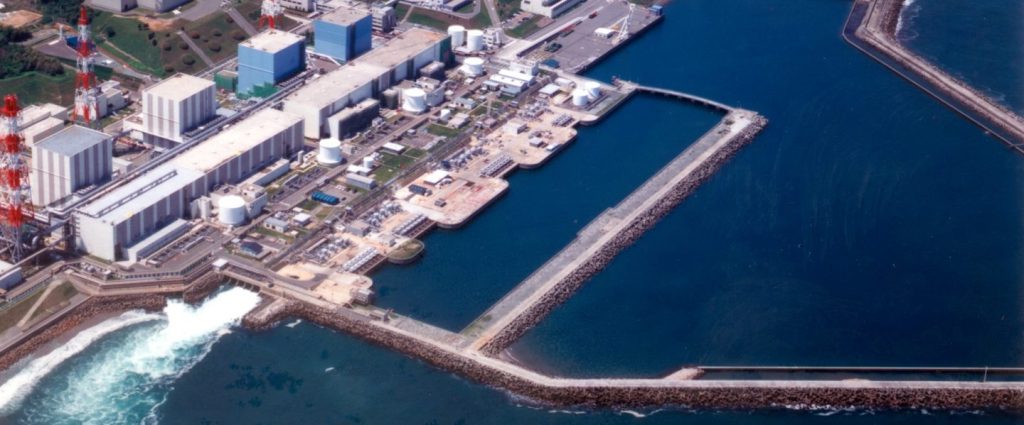
Fukushima-Daiichi Nuclear Power Plant before the disaster (nuclearwaters.eu).
But even though we are rightfully focussed on these things – which will inevitably profoundly change the world we live in – as an historian I need to contribute to keeping the memory of one of the largest nuclear disasters in the so-called civil nuclear industry alive: the disaster of Fukushima-Daiichi Nuclear Power Plant on 11 March 2011, following the huge Tōhoku earthquake and the following Tsunami.
3/11 is still an ongoing catastrophe, as the molten reactor cores are still not salvaged and the necessary cooling of the toxic material continuously generates scores of irradiated water, which in turn gets diluted and released into the Pacific Ocean. This now established practice by the Tokyo Electric Power Company caused criticism in the international community. China and South Korea, for example, have heavily protested against it. The fear of contaminated fishstocks and other marine animals and plants provoke scepticism in consumers and producers.
Furthermore, the decontamination efforts in the areas surrounding the failed nuclear power plant are stagnating. Once again, the argument pivots around the question whether constant levels of low-level radiation are harmful or not. While there is no absolute conclusive scientific evidence on this question, I personally find it likely that it does. Here, I would like to point out to the excellent book by colleague José Tapia, titled “The Chernobyl Disaster and the Mortality Crisis in Eastern Europe and the Former USSR” (De Gruyter 2022). Tapia managed here, to show how low-level radiation has actually caused tremendous harm in the aftermath of Chernobyl Nuclear Power Plant Disaster in 1986. In any case, and switching back to Fukushima, the question remains on what to do with contaminated earth, villages, trees, fields, and forests. As everywhere in the world, Japan also does not have a viable long-term solution to the radioactive waste caused by Fukushima-Daiichi.
The decommissioning process is extremely difficult and continues only at a haggard pace. So far, there is no realistic date in sight, and the consequences of this failure will continue to influence the regional and global flora, fauna, and human lives. Among loud voices from newly elected right-wing politicians that ostensibly nuclear power could be a motor for renewed economic growth, it is important to remember what kind of havoc this technology can cause. 14 years after the catastrophe, we are still trying to understand its consequences. In the meantime, Japan announced to put again more emphasis on its nuclear reactor fleet for the time to come.
So much has happened since my last post here. The phase of writing applications had been long and tiresome, but by now I managed to find an exciting and promising new position. Here, I would like to share a bit about that work with you.
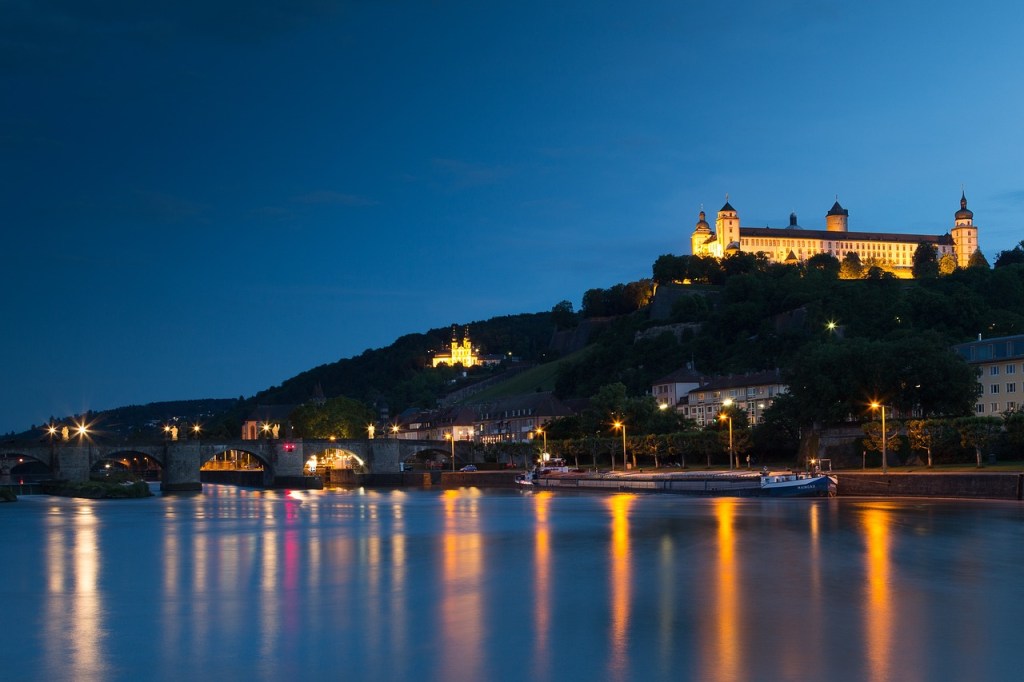
The palace in Würzburg, Germany, next to the Main River.
Since 17 February 2025, I am working as event manager in the programme division of the 104th German Catholic’s Day (104. Deutscher Katholikentag) that will take place in Würzburg (Germany) from 13-17 May 2026. Last week was basically my first week. I got to know a team of brilliant and highly motivated colleagues and am hyped to become part of this dynamic team. From what I can see so far, it will be an exciting journey until May next year, during which I am going to learn exceptionally much in a brief amount of time. I am also very curious about the people I will be able to connect to, expanding my network within the sphere of church-related organisations in Germany and beyond.
Making things even more exciting, during my first months I will also be working in the programme division of the Protestant “Kirchentag“, which will take place in Hannover (Germany) from 30 April to 04 May. Last week I was also able to get to know the colleagues there at the headquarters in Fulda – an equally amazing experience as it was the case in Würzburg. It is astounding how much I have seen and learned already in my first week – and I am very grateful to everyone making this possible.
Considering all of this, it is great to see that what I learned in Stockholm I can now use in my new capacity. Especially during the current political situation, I think it is important to have a positive impact on society. Something, I will now be able to contribute to with what I have learned so far. Now onwards to new experiences in 2025!
The end of the year is approaching rapidly, and as usual the last pre-Christmas week is being used to tie up all those loose ends, that had been left untended during the last quarter of the year. Let me use this moment to wish you all a wonderful holiday season, with lots of cookies, regeneration, and new inspiration for the new year! Thank you for having been part of my journey during 2024, and I am looking forward sharing many more wonderful moments with you in the year to come.
If I look back at 2024, then I remember of course my PhD-defence at KTH Royal Institute of Technology in Stockholm, Sweden. On 22 March, my doctoral project culminated in this exciting public event, featuring so many respected scholars of the field. It was so special, I will keep it very dear to my heart for the years to come. Here I would like to once again thank my “former” supervisors Per Högselius, Kati Lindström and Anna Storm for their ongoing support, but also all the other colleagues and friends that made all of this possible. I hope you are doing well, wherever you are right now! While I am at it: Domingos Jaime Langa had defended his PhD two days ago: stort grattis, Domingos!
Apart from that, my 2024 had been characterised by me moving back to Germany and trying to set up shop in Darmstadt – so far with mixed success (privately super successful, careerwise not). As some of you know, I am searching for my next position, which turns out to be exciting in itself. My next position is supposed to have a greater positive impact on society, allowing me to use what I learned so far for the benefit of society, of plants, and of animals on this planet. Despite multiple job interviews so far, the proper match has not been made yet. So if you stumble across a suitable job offer, please share it with me. But – and I am super grateful for that – I was able to recover from the hardships of the last years and feel pretty good, ready to take on the next big task. That was not self-evident in March. Therefore, I am super curious what 2025 will have in store for me in this regard.
2025 will already have a move to another city in store for me. Apart from that the future is yet unwritten, or “the future is wide open“! 🙂 In any case I continue to work on my next publications, which will be two scientific articles based in nuclear energy history of Ukraine. I am also thinking about the theme for my next book and while I produce lots of ideas, I yet have to conceptualise everything into a concrete plan. I am also playing around with the thought of starting a podcast on political events, focussing on Eastern Europe. Maybe 2025 is the year when I should finally start this. Anyway, I will let you know.
So, once again, Merry Christmas! I am looking forward to a beautiful and productive 2025 with you!
PS: Here is some shameless self-advertisement. I hope you might endure this 🙂 – All my publications of 2024:
Klüppelberg, Achim:Joining the Dnieper Cascade. Hydro-Nuclear Entanglements along Ukraine’s Largest River, 1950-2024, Conference Presentation (online) at: 11th Tensions of Europe Conference, Frankfurt (Oder, Germany), 20 September 2024.
Högselius, Per/ Lehtonen, Markku/ Lindström, Kati/ Meyer, Jan-Henrik/ Klüppelberg, Achim/ Evens, Siegfried:The Future of Nuclear Energy in a Historical Perspective, Roundtable at the Teknik- och Vetenskapshistoriska Dagar, Stockholm 13 June 2024.
Klüppelberg, Achim:Joining the Dnieper Cascade. Hydro-Nuclear Entanglements Along Ukraine’s Largest River, 1950-2024, Presentation at Teknik- och Vetenskapshistoriska Dagar 2024, Stockholm 13 June 2024.
Klüppelberg, Achim:Der Energiekomplex Südukraine. Eine Kombination aus Landwirtschaft, Wasser- und Atomkraft, presentation at Technikgeschichte über Mittag (KIT Karlsruhe, TU Dresden and Gesellschaft für Technikgeschichte e.V.), 31 May 2024.
Klüppelberg, Achim: Hydro-Nuclear Entanglements in Soviet Ukraine, Presentation at the CHORUS Seminar Series, online on 18 April 2024.
Non-scientific
Klüppelberg, Achim:Warum stehen Atomkraftwerke meist am Wasser? Sowjetische Atomindustrie, in: Schwedische Kirche, Deutsche St. Gertruds Gemeinde:Gemeindeblatt, 3 (2024), 10-12.
Klüppelberg, Achim:Zum Geleit. Unsere Reise,in: Schwedische Kirche, Deutsche St. Gertruds Gemeinde:Gemeindeblatt, 3 (2024), 3-4.
This Thursday and Friday, 14-15 November, the GWTF, the Gesellschaft für Wissenschafts- und Technikforschung, is hosting her yearly meeting in my old hometown of Dortmund in the Ruhr Area in the western parts of Germany. The overarching topic will be about how we can conduct research in a changed environment. Here the precarity of many academic careers in our field will be discussed, as well as ways to recent political controversies which influenced the research community. Curious about their take on it, I will join this event and see who I will be able to connect to.
In the meantime, I am searching for my next position. While there were a few interesting talks with colleagues about a possible cooperation, nothing substantial came out of my search until now. So maybe I will be able to pick up some ideas at the GWTF, let’s see!
*Update: Unfortunately I was forced to cancel my in-person-participation at the conference due to urgent private matters that reached me yesterday night. I will be giving the presentation remotely via Zoom. (As of 2024-09-18)*
In already two weeks we are going to meet in Frankfurt (Oder) for the next Tensions of Europe conference, discussing tons of history of technology and energy related research. I am really looking forward to it – both to the research announced in the great programme, and of course to see familiar faces again.
If you are also coming, please consider to visit my session and article presentation about hydro-nuclear entanglements in Soviet Ukraine. Please drop me a message if you want to meet and discuss collaboration – or if you just want to chat along! I am up for almost everything. In any case, I wish everyone a great time.
Here are the details:
20 September, Frankfurt (Oder) (Germany), 1.30 pm until 3 pm
Individual Paper Presentation at the XI. Tensions of Europe Conference with the title: “Joining the Dnieper Cascade. An Envirotechnical Water-History of Chernobyl Nuclear Power Plant, 1950-1986.” Location: Gräfin-Dönhoff (GD Aula) Room GD 203, Panel “Environment”.
Abstract:
Chernobyl was built at the northern tip of the Dnieper Cascade – a vast industrialisation effort comprising six hydropower plants and their respective reservoirs. While the plant brought nuclear power to Ukraine, the construction of the station was based on experiences and knowledge gained during the construction of those six stations. As nuclear energy was embedded into a sociotechnical imaginary of progress, the success or failure of the plant was in the hands of non-nuclear workers, artisans, technicians, and operators. A shock of the old (Edgerton) was more often found at the site rather than the breaking innovation of nuclear power. The knowledge transfer from hydro to nuclear power was key at the construction site of the early 1970s. Concrete and water, mundane building technologies, mass mobilisation and the attributes of the planned economy characterised the construction site of this nuclear giant.
This presentation investigates how Chernobyl was built, but not in a conventional way. Instead, it will consider how the envirotechnical system of the Lower Dnieper basin was renegotiated by adding a nuclear facility to the Dnieper Cascade. Through the realisation of the Kiev Hydropower Plant and thus the creation of its vast reservoir, the envirotechnical system of Kiev Province changed profoundly. Through the addition of the nuclear power plant, it was further developed into yet something new, combining established hydropower expertise with futuristic nuclear experimentation on the domestic RBMK and All-Union nuclear know-how. This led to a technocratic reshaping of a unique envirotechnical system that enabled the industrialisation of agriculture in southern Ukraine’s steppe lands, industrial growth in major cities, and the creation of base load and steering capacities of the whole electricity grid. The recent destruction of the Kakhovka dam in June 2023 took this infrastructural development to headline media, underscoring the importance of understanding its implications.
This presentation will be updated with recent developments and analyses.
Today is the 38th anniversary of the Chernobyl catastrophe, which began on 26 April 1986 at 1.23 am. At the moment it is impossible to remember what happened at the downstream end of the Pripyat River without thinking about the horrible war taking place in Ukraine. What we witness right now has never happened before: a regular war fought on the territory of a highly nuclearised country, in which so-called civil nuclear power plants are used as objects of war. The recent drone attacks on Zaporizhzhya Nuclear Power Plant in mid-April 2024 are the latest and obvious examples of this. In this text I want to put Chernobyl back on our mental map while reflecting on what the ongoing catastrophe means in a context of all-out war.
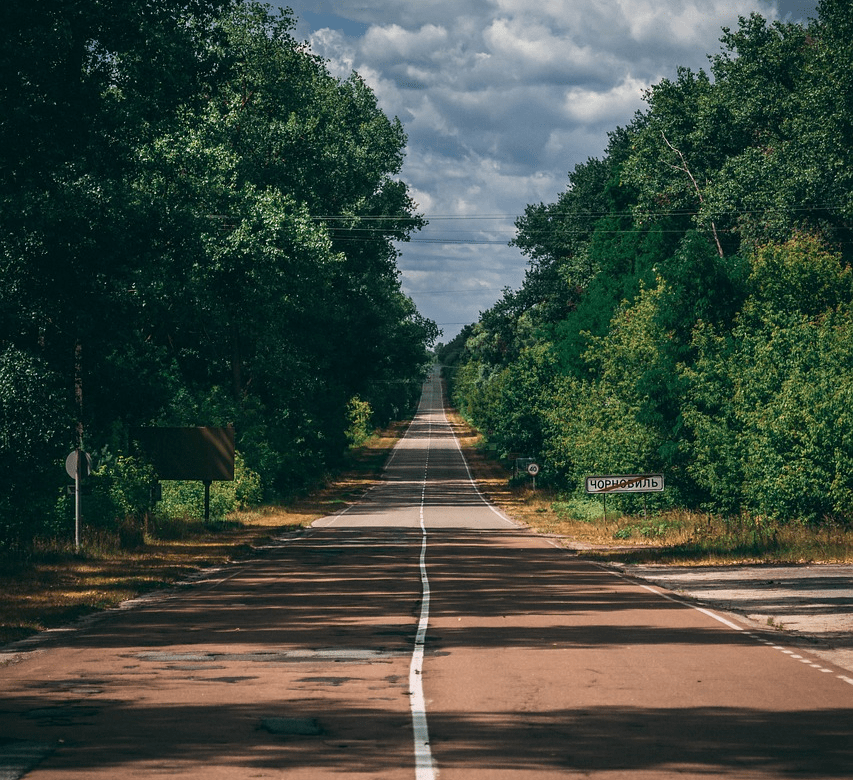
By chriswanders (Pixabay)
For someone who follows my work it may come to no surprise that I have a sceptical attitude towards the work of the International Atomic Energy Agency (IAEA). This is the case because the IAEA continues to lobby for the promotion of nuclear energy amongst the international community, downplaying the risks associated with this technological system and endorsing high-risk construction projects, such as the floating Akademik Lomonossov as a nuclearising project for the fragile Arctic and the Rooppur Nuclear Power Plant in Bangladesh, prone to flooding. Despite this and regarding the hazardous situation in Ukraine right now, I have to concede that the IAEA is doing excellent work to bring the Russian and Ukrainian site together to safeguard Europe’s largest nuclear power plant called Zaporizhzhya and Ukraine’s remaining nuclear stations South Ukraine, Khmelnitsky, Rivne (Rovno), and Chernobyl.
Sure, Zaporizhzhya continues to be on the brink of a severe accident as a direct result from acts of war. But the IAEA continues their efforts despite the danger, pushing both sites to reason, trying to help to ensure that basic safety routines and operation practices can continue, even though the strain on personnel and physical structures is clear for all to witness. The IAEA’s general director Rafael Mariano Grossi repeatedly travelled with his team to Zaporizhzhya. I can only hope that these efforts prove to be fruitful, because I cannot hear any other influential voices of reason on neither the Russian nor Ukrainian side willing to engage with concrete results. The fate of the other nuclear power plants remains unclear and endangered. Given the current frontline, Zaporizhzhya is the most threatened plant, but the permanent shelling of – especially civilian – energy infrastructure by the Russian army, puts the others at risk as well.
In the meantime at Chernobyl, the power plant is recovering from the temporary occupation in the beginning of the war. Looting and warfare have led to a loss in monitoring and scientific equipment, as well as to an interruption in safety routines and operations. Being forced to spend 36.7% of its GDP for military expenditures due to the Russian aggression, the Ukrainian government is forced to neglect the efforts of maintenance and remediation at Chernobyl. While the horrible war continues, the released radioisotopes continue their decay and change their attributes, especially in regard to their mobility in both soil and water. This creates ever new challenges to containment efforts. Forest fires and the movement of troops led to small radioactive clouds that redistributed radioisotopes within the zone of exclusion. Perspectively, the whole Chernobyl site needs to be deconstructed and the scores of radwaste confined in a permanent storage, which up to date does not exist. The deconstruction of the old sarcophagus, which is currently confined under the new one, is delayed due to the Covid-19 pandemic and the war. It is clear that the war makes Chernobyl to some degree ungovernable which will result in even larger problems as time progresses.
It is of the utmost necessity that safety routines regarding Ukraine’s nuclear power plants are being restored as quickly as possible. Furthermore, nuclear power plants have to be exempt from warfare, as the possible consequences of accidents, or even intentional attacks, will be tremendous for Ukraine and for Russia, but also for the international community. In general, this war shows that safety concepts of civil nuclear power plants need to be reassessed. 38 years after the Chernobyl catastrophe begun, Ukraine’s first nuclear power plant continues to pose threats to the environment and human societies. It serves as an example of what can happen if one (!) reactor explodes. Ukraine potentially still has 15 active ones.
On Friday afternoon, 22 March 2024, I defended my PhD at KTH Royal Institute of Technology. In hindsight it was a marvellous day, with so many people thinking of me and participating in this event that marked the end of the journey I embarked on 15 October 2018. A huge “Thank you!” to all of you!
The defence had just begun: My opponent Melanie Arndt from Freiburg University presents my work, as is the tradition at our division. By Aliaksandr Piahanau on 22 March 2024, who himself acted as “ersättare” for the defence committee.
After the defence we headed to the division at Teknikringen 74D for a mingle, while we waited for the results of the discussion of the committee. I was very happy when Florence Fröhlig declared that I had passed. What a moment! Afterwards my supervisors gave me truly memorable speeches and the division sang a self-written song (tradition that is!) which was amazing.
22 March 2024, 2:01pm: We are just about to start. By Anina Vogt.
It still has not really registered that I have truly finished this project. Tomorrow will be my last day at KTH Royal Institute of Technology, to which I will fondly look back, with so many impressive memories. After Easter I will still work on tying up a few lose ends and then I will rest for half a year, which is desperately needed. From September onwards I will start working again, finding a new position and further developing my ideas and what I learned.
If I still have not responded to your kind email or message, I will certainly do so in the near future. Please bare with me, as everything was a bit overpowering. I sincerely appreciate every single one of them!