16 April 2026 Florence (Italy): 5th EUROM Conference: Remembering Environmental and Natural Disasters in Europe. Subaltern Memories 2026 – Keynote about Chernobyl as a transforming memory space.
A Beacon of Hope, a Catastrophe, a Landscape Scar. Chernobyl’s (In-)visible Impact
Chernobyl Nuclear Power Plant in Northern Ukraine was not always a symbol of dystopia, nuclear technology gone awry, or of discarded livelihoods. When this nuclear giant was built, it embodied hope for a new generation of people, creating new (socialist) ways of life powered by futuristic and mighty technological appliances. Synergies between existing energy systems and this new and fascinating nuclear option were realised. Chernobyl started as a major infrastructural project, aimed at transforming a rural area, and propelling the whole region into Soviet modernity. Unfortunately, when the catastrophe of 1986 hit, this perception was profoundly and ever-lasting changed. Haphazard shortfalls in safety considerations, the blindly enforced mentality of plan-fulfilment, as well as the limitations of the Soviet economic system were open for everyone to see. Discussions were made, committees proceeded, and reports were written. The USSR tried to contain the negative consequences of the disaster, but they and the world community at large have failed in many regards. Families, villages, and cities suffered tremendously. Many problems still persist to this day, often unaccounted for by the authorities. The lobbying of the nuclear industry, the so-called Chernobyl Forum, and national interests of the different players soon pushed the attention away from individual suffering to institutional reasoning, blame gaming, and a perceived need to continue and forget. Today, Chernobyl Nuclear Power Plant still exists, and does not fail to produce problems. Encased in a second sarcophagus, which was breached by drone attacks, and located in a warzone, once again suffering is being made invisible. The danger is downplayed by the tenacity of quickly cascading horror news. If Chernobyl can become what Anna Storm called a “landscape scar”, healing has to take place. As of now, technocratic culture persists, while healing was postponed.
13 – 17 May 2026 Würzburg (Germany): 104. Deutscher Katholikentag.
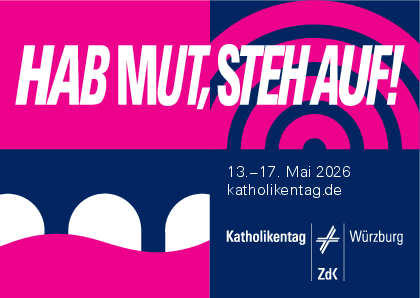
Vom 13. bis 17. Mai 2026 findet in Würzburg der 104. Deutsche Katholikentag statt. Erwartet werden erneut zehntausende Besucherinnen und Besucher aus ganz Deutschland und darüber hinaus. Die Katholikentage gehören zu den größten regelmäßig stattfindenden Ereignissen des kirchlichen Lebens in Deutschland. Sie finden in der Regel alle zwei Jahre in wechselnden Städten statt und bieten Raum für Austausch, Begegnung, Gebet und gesellschaftspolitische Diskussion – offen für Menschen aller Konfessionen und Weltanschauungen.
Veranstaltet wird der Katholikentag vom Zentralkomitee der deutschen Katholiken (ZdK) in Zusammenarbeit mit dem gastgebenden Bistum – im Jahr 2026 das Bistum Würzburg. Unter dem Leitwort „Hab Mut, steh auf!“, einem Zitat aus dem Markusevangelium (Mk 10,49), lädt das 104. Treffen dazu ein, sich mit aktuellen gesellschaftlichen und kirchlichen Fragen auseinanderzusetzen. Themen wie Frieden und Gerechtigkeit, Klimaschutz, soziale Verantwortung, Zusammenhalt in einer vielfältigen Gesellschaft und der Wandel der Kirche stehen im Mittelpunkt des Programms.
An den fünf Veranstaltungstagen bieten rund 900 Formate ein beeindruckendes Spektrum: Podiumsdiskussionen mit Vertreterinnen und Vertretern aus Politik, Kirche und Zivilgesellschaft, Workshops, Ausstellungen, biblische Dialoge, kreative Mitmachaktionen, interreligiöse Begegnungen, spirituelle Angebote, Gottesdienste, Konzerte, Theater und Kabarett – ergänzt durch den täglichen Abendsegen, die Nacht der Lichter und vieles mehr. Die inhaltlichen Schwerpunkte reichen von Theologie, Kirche und Ökumene über Politik, Gesellschaft und sozial-ökologische Transformation bis hin zu spezifischen Lebenswelten von Kindern, Familien, jungen Erwachsenen und Senioren.
Eine zentrale Rolle spielt die Kirchenmeile in der Würzburger Innenstadt, auf der sich zahlreiche Initiativen, Verbände und Organisationen präsentieren werden.
Gerade angesichts globaler Krisen, gesellschaftlicher Spannungen und innerkirchlicher Herausforderungen versteht sich der Katholikentag als Forum, um gemeinsam nach tragfähigen Antworten und solidarischen Lösungen zu suchen. Die Veranstaltungen basieren auf der christlichen Hoffnung und dem Prinzip der unveräußerlichen Würde jedes Menschen.
 Achim Klüppelberg