Our project at KTH has released a new newsletter, full with stories about what we did during the last months, pictures, and of course publication lists.
If you are interested in the project, make sure to check out our website.
Energy History & Eventmanagement
Our project at KTH has released a new newsletter, full with stories about what we did during the last months, pictures, and of course publication lists.
If you are interested in the project, make sure to check out our website.
…and ends an era which once was characterised by the promise of abundant cheap energy that was shattered during the disaster at Chernobyl Nuclear Power Plant in 1986 and buried after Fukushima-Daiichi in 2011. Nuclear energy in this Central European country has always been a contested issue, and the scale of it made it inevitable for society to debate its use.
After World War Two, both Germanies embarked on the nuclear journey to take part in this then futuristic new technology. After the nuclear bombs had been thrown on the Japanese cities of Hiroshima and Nagasaki, it became clear that in order to secure any form of independent statehood a country needed to have nuclear weapon capacities of some sort to protect itself. For Western Germany, this was done through a deal with the USA that technically is still valid today: The US would station some nuclear weapons on Western German soil and in the case of a war against the USSR, West German air planes and fighter pilots would use these bombs as part of a bigger scheme NATO under the leadership of the US had prepared. Eastern Germany also embarked on the nuclear journey, building basically two relevant facilities: a research reactor facility at Rheinsberg and a massive industrial nuclear power plant at Greifswald. After NATO was formed and Western Germany had joined it, the East answered with the creation of the Warsaw Pact, which equally foresaw nuclear protection for the GDR. That being written, it was clear for every German, no matter whether born in Leipzig or in Düsseldorf, that nuclear war in Europe would inevitably lead to the complete destruction of Germany as a whole. Nuclear weapons are after all political weapons: as soon as they are used they lose their purpose and destroy everything. Yet the path a country has to take in order to obtain these weapons is riddled with potentially dangerous stepping stones.
In post-unification years, the nuclear industry tried very hard to always separate the civil usages of nuclear energy from its military roots and implications. While the aftermath of World War II prevented Germany to officially get her own nuclear weapons, at least the Federal Republic did procure every step of the nuclear lifespan on its own territory – with the exception of considerable uranium mining – to have the foundation to create nuclear weapons if at some stage the need shall occur. And that leads us to a very important point often overlooked in the German debate on quitting nuclear energy: the facilities in Gronau and Lingen.
The uranium enrichment facility in Gronau, partially owned by the states of Great Britain, the Netherlands, and Germany, will continue to produce enriched nuclear fuel (3-6%). Its capacity at the moment is 3,700t of product per year. Its work will not be hindered by the official stop to use nuclear energy. Instead, the enriched uranium will be continued to be exported.

The other facility in Lingen, located in Lower Saxonia, creates fuel elements. Owner of this facility is the Advanced Nuclear Fuels GmbH, which belongs to the French nuclear giant Framatome. Lingen produces conventional fuel elements, nuclear fuel in powder or pellet from, and zirconium alloys. Most produce is being exported. Two of the biggest customers are the disputed Belgian nuclear power plants in Doel and Tihange.
So, the so-called “Atomausstieg” is actually only a partial ending of the active nuclear legacy in Germany. Now a new chapter can begin: that of decommissioning and what Tatiana Kasperski and Anna Storm have coined as eternal care. The country lacks an option for storing nuclear waste and as of now has no concept of how to deal with the scores of irradiated material. Let’s see, how this will be solved. After all, the current situation does also open the possibility to create new ways and understandings of how to deal with the residue of the nuclear age.
Today, 15 April 2023, is a day to celebrate. Generations of people have protested against nuclear energy in Germany. Today a very important step towards a nuclear free country has been taken. Let’s make it a memorable day!
Further readings:
Bauchmüller, Michael: Kernkraft made in Germany, in: Süddeutsche Zeitung, 11 March 2021.
11 March 2011 (in brief “3/11”) turned out to be a crucial date for Japan and the Pacific Region. On this Thursday afternoon, at 2.46 pm local time, Japan’s east coast fell victim to the Tōhoku earthquake. The earth shook for several minutes, with its epicentre laying about 370 km from Tokyo in the Pacific Ocean. The earthquake caused a huge Tsunami, resulting in a double catastrophe for the Japanese.
As a consequence of both, earthquake and tsunami, several nuclear power plants suffered significant damage. A plant most affected was Fukushima-Daiichi. While the station was more or less able to withstand the earthquake, the following tsunami heavily damaged the electricity grid and destroyed the necessary grid connection to provide electric energy in sufficient amounts to the plant’s cooling system. As anticipated, emergency diesel generators jumped in – but their fuel ran out quickly. In the course of the following days, three of six nuclear reactors suffered meltdowns. In reactor four, serious damage through hydrogen explosions occurred. The catastrophe had begun.
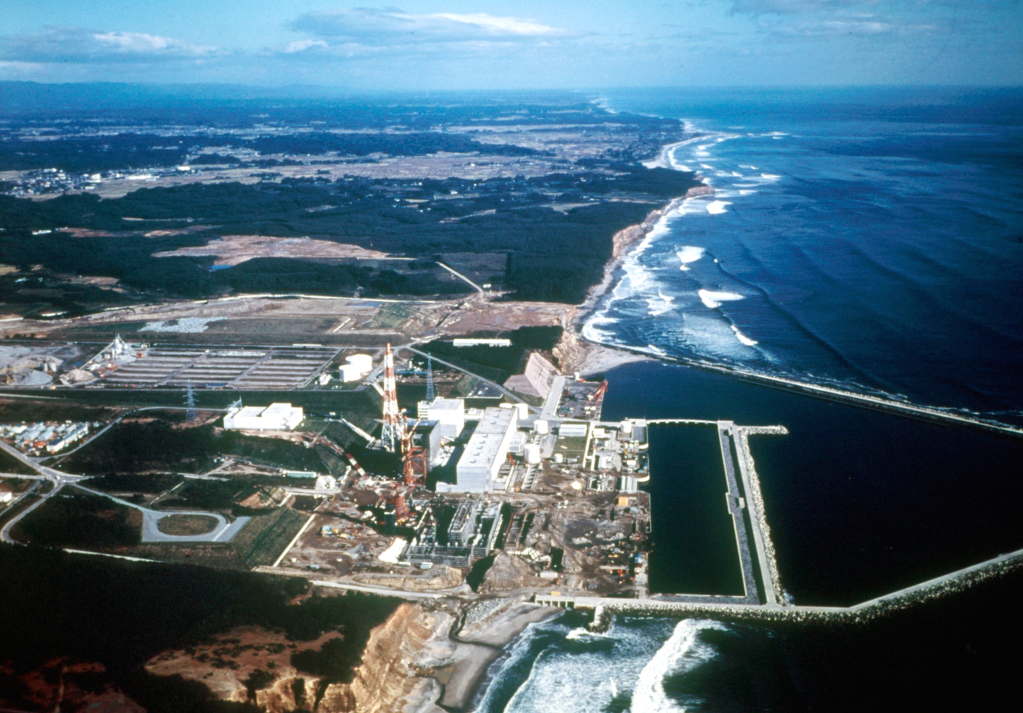
So what happened? In essence, safety considerations were not taking exceptional disasters of the scope of the March 2011 earthquake and tsunami into account. In other words, the magnitude of the earthquake and the height of the tsunami were simply greater than the maximum anticipated strain on the nuclear power plant. The plant operator, TEPCO, did not consider an earthquake of magnitude 9 to be a “credible event” in the Japan Trench, as the IAEA concluded in its 2015 report on the accident. The company did not find it economically justifiable to invest in measures to protect the plant against such an event. Per Högselius, professor for history of technology at KTH Royal Institute of Technology in Stockholm, explains that the company did consult historical earthquake and tsunami reports, but the conclusion was that although immense tsunamis did occur from time to time along the Japanese coast, no tsunami higher than 5.7 meters had ever been recorded in the particular stretch of coast where the Fukushima nuclear station was located.
Soon, a Japanese parliamentary panel declared that the disaster was not only a natural one. It was also a human-made one, because official institutions believed that measures taken were sufficient and that the cost-safety calculations were appropriate. This is correct, since humans created this envirotechnical system, in which the nuclear power plant was integrated into the waters of the Pacific Ocean. As Charles Perrow has taught us in Normal Accidents, every technological system that incorporates complicated and potentially risky machines with the operation of human actors, will inevitably lead to incidents and accidents as time progresses. Time was the crucial variable, both in TEPCO’s risk assessment and in reality.
In July 2022 the district court in Tokyo closed a lawsuit against four former heads of TEPCO, investigating their potential negligence in said safety assessments. The court found them guilty and charged them with privately having to pay 13 trillion yen in retribution, about $95 billion at that time. In the opinion of the court, these officials could have prevented the catastrophe if they would have acted appropriately with safety and not profits in mind.
For TEPCO water was both a saviour that made it possible to re-establish the cooling of the molten reactor cores and a medium of contamination at the same time. Currently, the operator struggles with securing the remains of the destroyed reactor cores and storing them somehow safely on land to facilitate decommissioning efforts. Unfortunately, high levels of radioactivity prevent a lot that needs to be done. The reactor cores need permanent cooling to prevent further uncontrolled nuclear reactions. Due to the initial destruction of the cooling circuits and the following makeshift replacements, water was not kept within and reused as coolant, as it leaked into the reactor building. From there, it was pumped out, treated and stored outside the plant. On several occasions, it was ultimately dumped into the Pacific. At the time of writing, no end to this problem is in sight and TEPCO has announced to soon release a significant amount of contaminated water into the ocean.
In the meantime, decontamination work has been conducted in many places in Fukushima prefecture. A huge amount of top soil, saturated with toxic radioisotopes, was dug up and stored in plastic bags on dumping sites. These sites are usually out in the open and expose these bags to the elements, contributing to their deterioration.
Tomoko Otake from the Japan Times writes that “[s]ince 2015, the Interim Storage Facility, which straddles the towns of Okuma and Futaba and overlooks the crippled plant, has safely processed massive amounts of radioactive soil — enough to fill 11 Tokyo Domes — in an area nearly five times the size of New York’s Central Park.” This site unpacks the black plastic bags, filters the soil, and buries it in prepared 15-metre-deep pits. Afterwards, the pit is filled with uncontaminated earth and sealed with a patch of grass. “Areas where the work has been completed look like soccer fields”, writes Otake.
While with this method the contaminated soil is out of sight, it is unsure where the buried radioisotopes will end up. These prepared pits have a drainage system aimed at preventing toxins to enter the groundwater acquifers. That being written, it is unclear how underground migration will eventually turn out. Local residents seem to be in opposition to this practice.
On both spheres, on land and in water, Japanese authorities and TEPCO struggle to get a grip with the ongoing contamination stemming from the destroyed nuclear power plant. Even worse – and here a strong parallel to the Chernobyl exclusion zone can be seen – once contained radioisotopes do not stay at a given location. They recycle through food chains and the environment until they have decayed. Wind, fire, water, erosion, and the life cycle of living beings transport radioisotopes to unforeseen places and accumulate in changing hotspots that in turn might become dangerous to humans. The contamination of ground water, ocean water and soil inevitably leads to a contamination of foodstuff and drinking water. This in turn leads to radioisotopes being incorporated into human bodies, where they make the host sick in multiple and varying ways.
Unfortunately, the meltdowns have taken place twelve years ago and nothing can change that. It is now paramount to find a way to safely decommission the destroyed reactors and by doing so to stop the continuous spread of further contamination, for example through the release of radioactive water into the sea. I hope that that world will continue to support Japan in a joint effort to prevent the worst effects of the catastrophe and to at least find a way to stop the continuous practice of producing more and more contaminated scores of water. This is a problem that concerns everyone and TEPCO is clearly not able to solve it on its own.
As we commemorate today’s 12th anniversary, we should remember that tremendous resources will be needed to contain this problem. It also manifests a stern warning sign that these sorts of accidents – whether it was Chernobyl in 1986 or Fukushima on 3/11 – might repeat themselves at one of the about 500 civil nuclear power plants around the world. Living on an earth that desperately has to tackle climate change, proponents of nuclear energy readily point to this power source as a potential tool to help transform our energy systems into greenhouse-gas-neutral assemblages. I doubt this narrative, as there is no final storage or any anticipated solution for radioactive waste, no comprehensive way to deal with disasters, and no understanding of what it means to care for toxic materials for centuries and millennia to come. If anything good could come out of 3/11, then maybe it can help us to reflect what we are doing to the planet and to ourselves.
Further reading:
Bothe, Julian a. Friedrich, Lisa Marie: Weder Kohle noch Atom, in .ausgestrahlt, 28 February 2023.
Polleri, Maxime: Our contaminated future, in Aeon, 15 December 2022.
SVT.se: Tolv år efter olyckan – kärnkraften åter på frammarsch i Japan, 10 March 2023.
Every writer knows that there are different phases in our work. Of course, the most important phase is the writing phase. After all, it is our job to produce high-quality texts, is it not? Subsequently, every writer also knows that in order to be able to do so, one needs high-quality sources. While working as an historian, having access to valuable source material is paramount in order to write something relevant for the respective academic field. At the same time, the Covid-19 pandemic has made normal schedules obsolete, and many archival trips had to be cancelled or postponed – in my case, since summer 2020. Therefore, I was very grateful to finally be able to go on a crucial archival trip this November.[1] My destination was the vibrant Ukrainian capital of Kiev, and I had three archives stacked with Soviet-era nuclear documents on my to-do-list. Here, I would like to tell you about my experiences and impressions.

Naturally, Kiev is a city with a rich history, reflected in different architectural styles, urban planning and monuments. Kiev has a troubled and at the same time glorious history. Being the medieval cradle of Eastern Slavic principalities, states and nations, having formed the mighty Kievan Rus Empire, which through its Baptism led to the Slavic traditions of Eastern Orthodoxy, forming the cultural, political, and industrial capital of Ukrainians, posing as a major battlefield in World War Two, centring Ukraine’s independence after the collapse of the USSR and recently hosting the Maidan protests, this place emanates historic significance at its different sites. Kiev is also a torn city, in which the current economic crisis, the hybrid-war with Russia, antisemitism and nationalism struggle with opposing ideas on the streets. If we live in a time during which Ukrainian history is written in short intervals, then Kiev is the place to be.


My work led me to three archives. The first on the list was the Central State Archive of Supreme Bodies of Power and Government of Ukraine (Центральний державний архів вищих органів влади та управління України, ЦДАВО). Located in South Central Kiev, the archive is based in a complex of several governmental institutions. The reading room offered a rich ensemble of documents from Soviet-Ukrainian ministries and planning institutions, which proved to be invaluable for the immediate progress of my dissertation.
My second station was the Central State Archive of Public Organisations of Ukraine (Центральний державний архів громадських об’єднань України, ЦДАГО України), where I looked into files from the Communist Party. The archive was located next to the Kiev Region State Administration, along which the massive Lesi Ukrainky Boulevard allowed dozens of cars to speed on ten lanes towards the city centre. Here, I was less fortunate. The CP Ukraine files I ordered offered insights into internal party affairs, but not into any planning aspects of Soviet Ukraine’s energy system.

My third and last station on this trip was the State Archive of Kiev Province (Державний архів Київської області, ДАКО). Inspired by Louis Fagon’s approach of visiting local and regional archives in order to circumvent the occasional quietness in central documents on nuclear issues, I examined local party protocols of the towns of Pripyat and Chernobyl to find out more about water amelioration processes and different important stages of the construction of the Chernobyl Nuclear Power Plant. Here, lots of exciting issues came to light and I am looking forward to incorporate them into my next article.
Apart from those visits to the archives, I was also able to see the exhibitions at the Holodomor and the Chernobyl museums. Both were very impressive. The Holodomor Museum was located in the Park of Eternal Glory overlooking the Dnepr, in which apart from the museum many memorials for Ukrainian nationalists were placed. There, visitors would see an exhibition showing the horrors of the forced famine in Stalin’s Soviet Union from 1932-33. This was based on many personal testimonials and artefacts from survivors of these times. Their main message was that it was a planned famine created by Moscow as a way to subdue ethnic Ukrainians.


I was very surprised, in a positive way, by the Chernobyl Museum. There, they had collected multiple artefacts of the main protagonists of the catastrophe, such as identity cards and passports from Deputy Chief Engineer Anatoly Dyatlov, or accident-shift-leader Aleksandr Akimov. Selected archival documents along newspaper articles were also on display. Next to them, one could see the flags of the firefighter brigades, uniforms, respirators, and dosimeters. Two whole sections were dedicated to the construction of the first and the second sarcophagus. Following were some dedications to the international solidarity in regard to the mitigation of the consequences of the accident as well as the ongoing help for chronically sick people, such as the “Children of Chernobyl” network. Another room was dedicated to the effects of radionuclides dispersed by the accident to the environment and human society. Here the focus was not to tell a uniquely Ukrainian story, but instead to document the disaster from an international point of view.
Summarising, I am very grateful for this opportunity that arose at this crucial state in my dissertation. Kiev is an exciting place, where so many things have happened and are happening right now. It is definitely worth a trip.
This text was originally published on nuclearwaters.eu on 7 December 2021.
[1] 03 -20 November 2021.
Have a WordPress.com account? Log in now.

